Why Strong Retail Strategies Break Against Store Reality
Retail strategies rarely fail because they are bad. More often, they break against a store reality that has become too dense to sustain without a simpler, clearer, and more agile operating framework.

In retail, strategies rarely fail because they are bad. More often, they fail because they collide with a reality that is denser, faster-moving, and more demanding than the organization can truly absorb.
Customers now expect everything at once: more availability, more fluidity, more responsiveness, more consistency. In response, retailers naturally try to keep up. They multiply omnichannel services, refine pricing policies, accelerate stock rotation, reinforce standards, and enrich the in-store experience.
The ambition is right. But it comes with a hidden cost: every new requirement adds more operations, more trade-offs, more KPIs, more human handling, and more complexity.
When everyone wants to do the right thing but the whole system no longer holds together, the issue is no longer commitment. It becomes structural.
A strategy does not get lost in the idea, but in the journey
At headquarters, many retail strategies are relevant. Plans are coherent, priorities seem clear, and intentions are often sound.
But in retail, a strategy only truly exists when it makes its way through the organization and reaches the store. And it is in that journey that it often starts to lose strength.
It loses clarity.
It loses a sense of priorities.
It loses continuity.
It loses execution power.
Not because teams resist, but because every new priority lands on a system that is already saturated.
The problem is not willingness. It is the ability of the whole system to hold
In many retail organizations, headquarters wants to transform, managers want to follow through, and stores want to execute.
But the sum of all that goodwill is no longer enough to keep the whole system together.
As priorities, tools, follow-ups, standards, and KPIs keep piling up, the organization gradually loses sight of what truly matters most. Headquarters increases requests in order to steer more closely. Stores make decisions under pressure in order to keep things moving. And overall coherence starts to weaken.
The cost of that loss of cohesion is enormous, but rarely spectacular. It spreads through a multitude of small operational fragilities: uneven execution, projects launched but poorly followed through, inconsistent standards, and significant effort producing diluted results.
Customers, in the end, always notice.
Giving up is not an option
And yet the answer is not to do less. Giving up would mean accepting being left behind.
So the real challenge lies elsewhere: how can ambition continue to rise without dislocating the organization? How can more complexity be absorbed without losing the ability to hold the whole system together?
This is where the need changes in nature. It is no longer enough to add more reporting, more follow-ups, or more layers of control. What is needed is a simpler, more agile, more readable framework.
What this now requires
It requires simple indicators, directly aligned with strategy.
One single application, instead of an accumulation of tools and messages.
AI connected to the company’s real priorities.
Prioritization of actions based on financial stakes and concrete impact.
In other words, not one more layer, but a new capacity to understand, arbitrate, and execute.
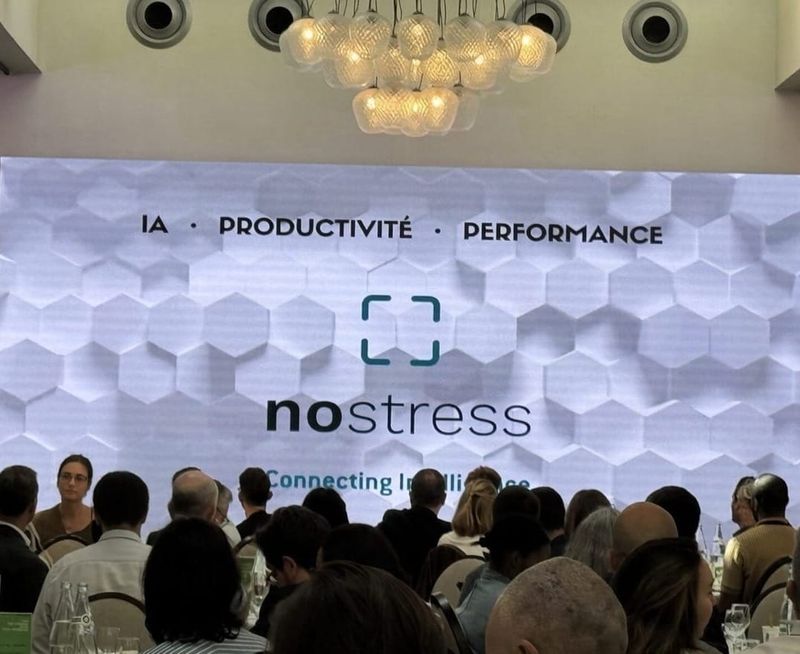
This is precisely where nostress comes in: helping retail organizations make their ambitions hold in the reality of the store.
In retail, the challenge is no longer simply to have good ideas. It is to make those ideas survive reality.
The retailers that will stand out tomorrow will not simply be those with the best strategies. They will be the ones that best equip their teams to make those strategies hold.