A strategy only has value in its application...By everyone.
Every company thinks it has a strategy. But how many truly know what to do with it? The real challenge is not defining strategy, but making it actionable — by everyone, in every decision.

So why does it remain so poorly formalized, so poorly shared with teams… and, even worse, unknown to your AI?
So why does it remain so poorly formalized, so poorly shared with teams… and, even worse, unknown to your AI?
Every company thinks it has a strategy. But how many truly know what to do with it?
On paper, everything seems clear. Priorities are defined, directions are set.
Yet as soon as you move into operations, something breaks.
Decisions diverge. Priorities fade. Everyone acts based on their own reference points. This is neither a lack of intelligence nor a lack of engagement. It reveals a deeper issue: the difficulty of transmission.
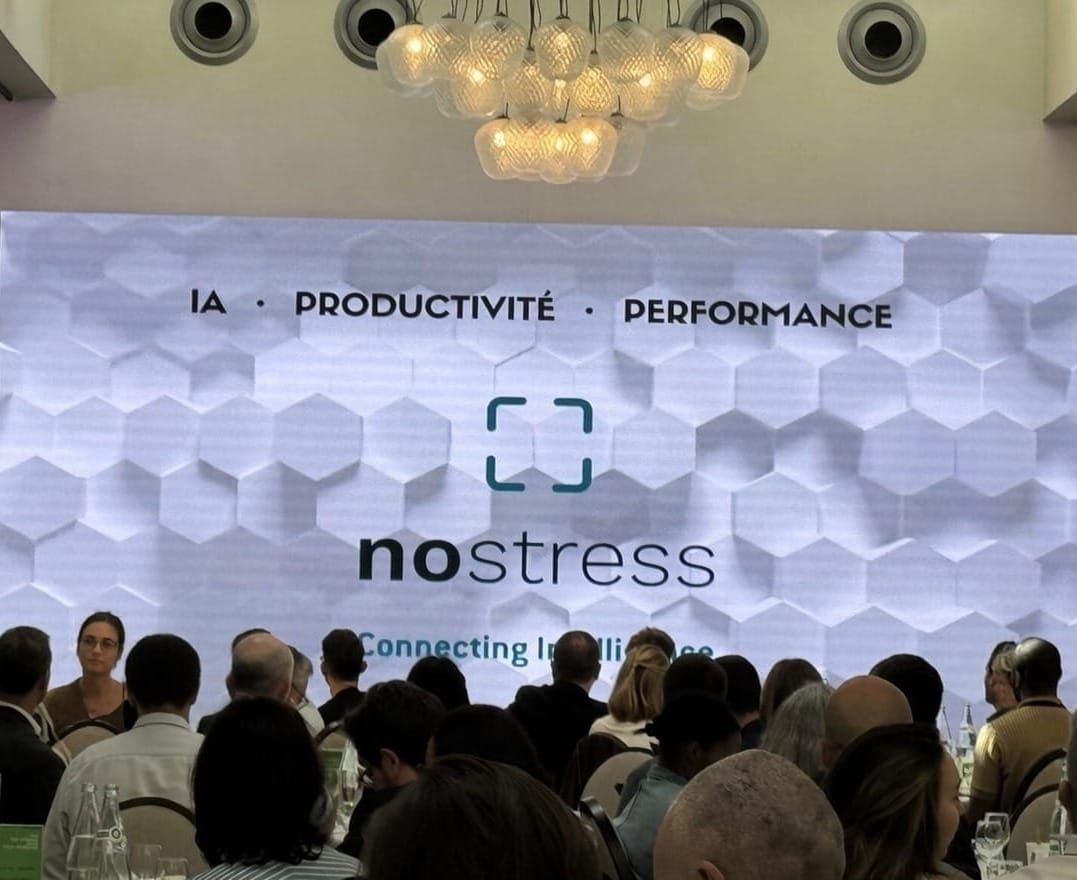
During a workshop we recently led at SPOT in Chantilly, this became immediately clear.
Everyone in the room had a strategy. Everyone had data. Yet no one was able to guarantee consistent execution.
This gap is not limited to stores. It runs across the entire organization. Buying, merchandising, pricing, operations — each function interprets the strategy through its own constraints and habits. Over time, alignment erodes, not abruptly, but enough to impact performance.
Part of the issue lies in how strategy is still treated today. It is designed as something to be shared — presented, documented, distributed through slides, notes, or dashboards.
But teams do not operate through documents. They operate through decisions.
In those moments, no one goes back to read the strategy. They act. And that is precisely where the gap appears.
Data has significantly improved visibility. Tools are more powerful, analyses more refined, and access to information far greater.
Yet a fundamental reality remains: seeing does not mean knowing what to do.
Data clarifies situations, but it does not directly guide action. Decisions remain open to interpretation, and it is within that interpretation that inconsistency emerges.
The rise of LLMs has generated strong expectations. Their ability to produce answers is remarkable.
And yet, in many organizations, their operational impact remains limited.
The issue is not their intelligence. It is the lack of context.
An AI that does not understand the company it operates in cannot produce truly relevant answers. If it does not know the priorities, the rules of the game, or what defines a good decision, its responses will inevitably be misaligned.
This is comparable to asking someone to make decisions without ever explaining the strategy. The answers may be coherent, but they will struggle to be relevant in practice.
The core issue is therefore not AI itself. It is the ability to make strategy truly usable.
An AI cannot execute a vague intention. It needs clear priorities, explicit trade-offs, and a structured decision logic. In many organizations, this knowledge exists, but it remains implicit, fragmented, and difficult to activate.
This is where the role of AI can fundamentally evolve. Rather than being a tool that is occasionally consulted, it can become a true transmission layer between strategy, data, and action.
At Nostress, this is the foundation of our approach. An AI is only valuable if it genuinely understands the company it serves.
To achieve this, we continuously feed it with what shapes the organization: its strategy, its priorities, its business logic, and its operational reality. The objective is not simply to improve answers, but to enable meaningful interpretation.
This shift transforms its role. The AI becomes capable of reading a situation, connecting it to strategy, and proposing a concrete action while explaining why.
Each recommendation becomes a moment of understanding: the AI does not simply suggest an action, it explains the strategic logic behind it.
In doing so, it no longer just assists. It contributes to alignment and shared understanding.
What this enables is a structural change. Strategy no longer circulates through documents alone. It becomes embedded in everyday decisions.
It is no longer something that is occasionally consulted. It becomes something that is continuously applied, by everyone.
Retail has never lacked intelligence. But it has always struggled to align that intelligence at scale.
AI introduces a new opportunity. Not simply to improve analysis, but to strengthen transmission, clarify intent, and guide action.
Provided it is given the context required to act with precision.