Retail Still Loses Too Much Value Between What the Store Sees and What Headquarters Understands
Retail still loses too much value between what the store sees and what headquarters understands. The real challenge is not to move more information upward, but to turn field signals into useful intelligence.

The store often sees the problem first? It still has to be heard — and what it sees has to be turned into decisions.
In retail, stores pick up useful signals very early: rising demand, a product that customers like before it fully sells through, recurring customer friction, underperformance that is being misread, or a local opportunity. Stores often detect change before headquarters does, simply because they remain the only place where people see, hear, and speak to customers directly.
But that intelligence only creates value under one condition: it must be heard, qualified, and turned into decisions.
Seeing early is not enough
The field often notices things before anyone else. It sees customer hesitation, unmet demand, and the gap between what was planned and what is actually happening.
That power of observation is valuable. It makes the store much more than a place of execution: it is a living sensor of commercial reality.
But seeing early does not always mean seeing accurately.
Stores also identify false problems — or at least situations whose importance can be overstated because they are experienced locally, intensely, and immediately. A real irritation at store level is not always a strategic priority at company level. A relevant perception is not yet a decision.
That is why “I think” cannot be enough. It must be connected to “the data says.”
Useful data is broader than sales
That still leaves one question: what data?
Connecting store perceptions to business reality cannot mean looking only at raw sales. That view is too narrow. It also requires richer signals: Google ratings, customer verbatims, CRM data, product-store clusters, local context, or quality of product presentation.
It also requires the ability to estimate each store’s potential. Without that, observed performance is easily distorted by external events, traffic differences, stockouts, or local context. Weak sales do not always tell what a store could realistically have achieved.
This is exactly where artificial intelligence becomes decisive: not to replace judgment, but to rebuild a fairer reading of reality.
Headquarters also sees problems — without always correcting them
The other mistake would be to naïvely oppose the field and headquarters.
Headquarters also sees part of the problem. But it does not always try to fix it immediately. Sometimes because of limited resources. Sometimes because of limited time. And sometimes because strategy itself creates tensions that are consciously accepted.
A lack of stock, weak depth in a category, or insufficient marketing support may be perceived as anomalies by the store. At company level, however, they may be the result of a deliberate trade-off, compensated by other growth levers.
So not every problem is a mistake. Some are the accepted consequences of strategy.
It is easier to hear a tree falling than a forest growing.
Raising a problem should not become a shield
A store may be short on best-sellers, inventory, or marketing support. Those may be real issues. But in the short term, it still has to work toward its target with what it has.
A useful escalation should not suspend action. It should clarify it.
The role of steering is not only to acknowledge what is missing. It is also to help identify, within what already exists, what can be activated immediately to create short-term performance, while headquarters works on more structural responses over a longer horizon.
Turning signals into useful intelligence
So the goal is not to send more information upward. The goal is to turn what the store sees into useful intelligence.
That requires structuring field feedback, linking it to real indicators, distinguishing valid perceptions from false signals, connecting local observations to global strategy, and then turning that reading into actionable decisions.
Qualitative information has always been valuable in retail, but for a long time it was too diffuse and too heavy to exploit at scale. AI changes that. It can now analyze feedback from hundreds of stores in seconds, surface recurring signals, and connect them with broader datasets to build a more robust understanding.
It does not replace human intelligence. It helps it see more accurately and decide faster.
What this now requires
What retail needs today is not simply to listen more to stores. It is to create a framework in which what they see can be qualified, cross-checked, prioritized, and turned into action.
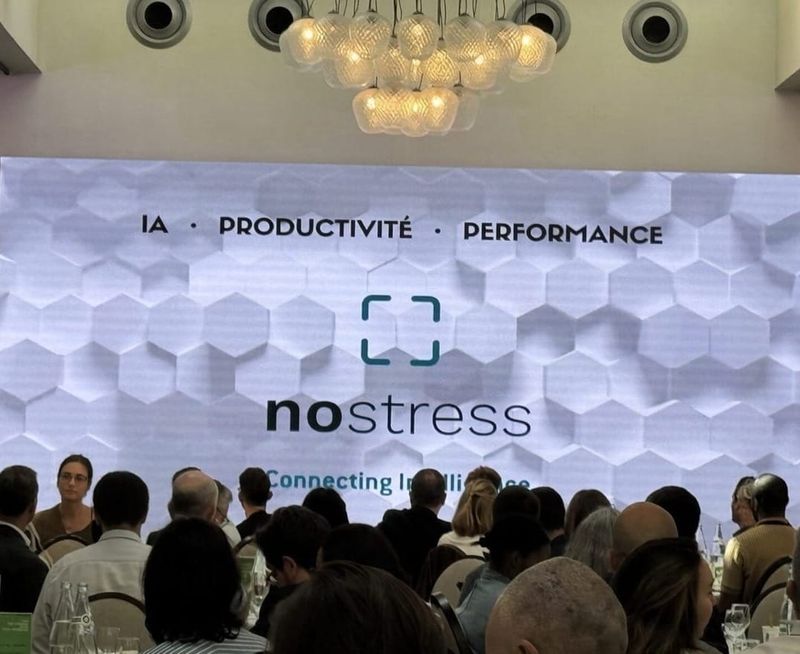
This is precisely what a system like nostress should make possible:
Structured field feedback within a clear framework.
Perceptions connected to KPIs.
AI able to analyze feedback from hundreds of stores in an instant.
Data sources richer than sales alone.
A global reading that distinguishes a true local issue from an accepted strategic trade-off.
And, at store level, the ability to identify immediate demand opportunities within existing stock.
The store often sees first. But that is not enough.
What it sees must still be heard, separated into signal and noise, connected to richer data, placed in strategic context, and turned into useful decisions.
That is the condition for retail to stop losing value between what stores perceive and what headquarters eventually understands.